Golden eagles over the granite
A careful look at the golden eagle on Arran: its wingspan, shallow-V flight, northern hills and the familiar problem of mistaken identity.
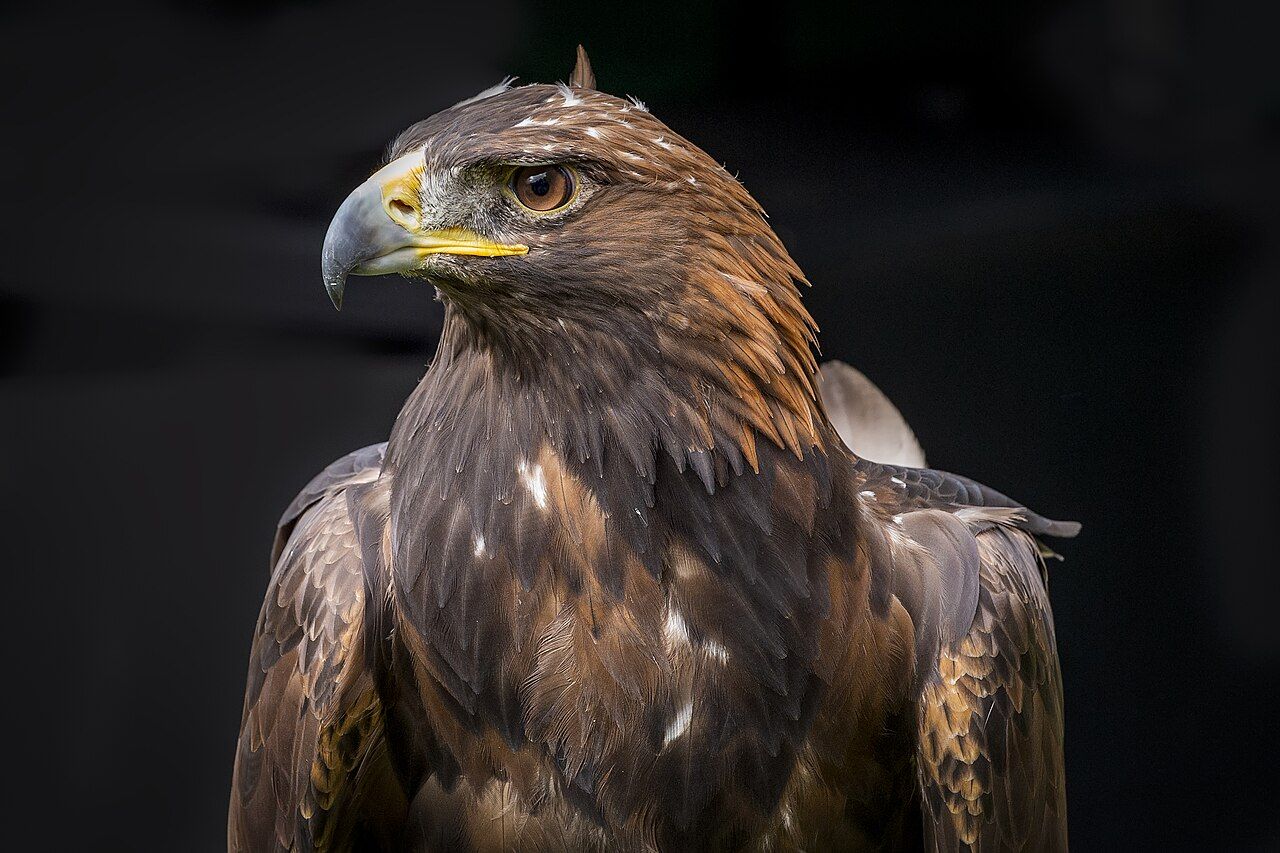
How can a golden eagle be recognised?
What is the useful clue when a bird is high above Arran’s hills? Start with the shape of its flight. Golden eagles soar on flat wings held in a shallow V. Their wingspan is about two metres. Those are firmer clues than a vague impression of size, especially on an island where buzzards are much more common and are often mistaken for eagles.
Neither clue needs to carry the whole judgement. The wing position is a detail to watch for, not a promise that every distant bird can be identified with certainty. The worthwhile question is not simply whether a bird looks impressive, but whether its shape and flight fit what is known of a golden eagle.
Where does it belong?
Golden eagles nest in the northern hills of Arran. The RSPB's species pages describe the golden eagle as a bird of remote mountain and moorland, which gives a sensible frame for the island’s northern ground. Arran has a reputation as a particularly easy place in southern Scotland to see a golden eagle. That is an inviting reputation, but it does not make every large bird an eagle. The more useful response is to look carefully, and to let the identification rest if the clues are not there.
The scale of the setting is part of the appeal, but the bird should remain the subject. the high tors of the north bring the landscape into view without making a sighting certain. the deer on the same hills belong to the wider picture too, though the eagle’s flight is the detail to keep in mind.
What does it hunt?
Golden eagles on Arran hunt mountain hares, grouse and carrion. That list gives a clearer sense of the bird’s place on the island than a grand label ever could. It also keeps the account grounded: this is a bird living from the hills and their wildlife, not merely a striking outline against the sky.
There is no need to turn the prey list into a prediction about what a particular eagle will be doing. The facts do not tell us what any one bird is hunting at a given moment. The useful distinction is simpler: a golden eagle belongs to the northern hills, and its flight has recognisable features.
Could it be a buzzard?
It could. Buzzards are much more common than eagles on Arran, and they are often mistaken for them. That makes the common bird the sensible first comparison, not an inconvenient footnote. A large-looking bird is not enough; the shallow V of the eagle’s flat wings is a more specific clue.
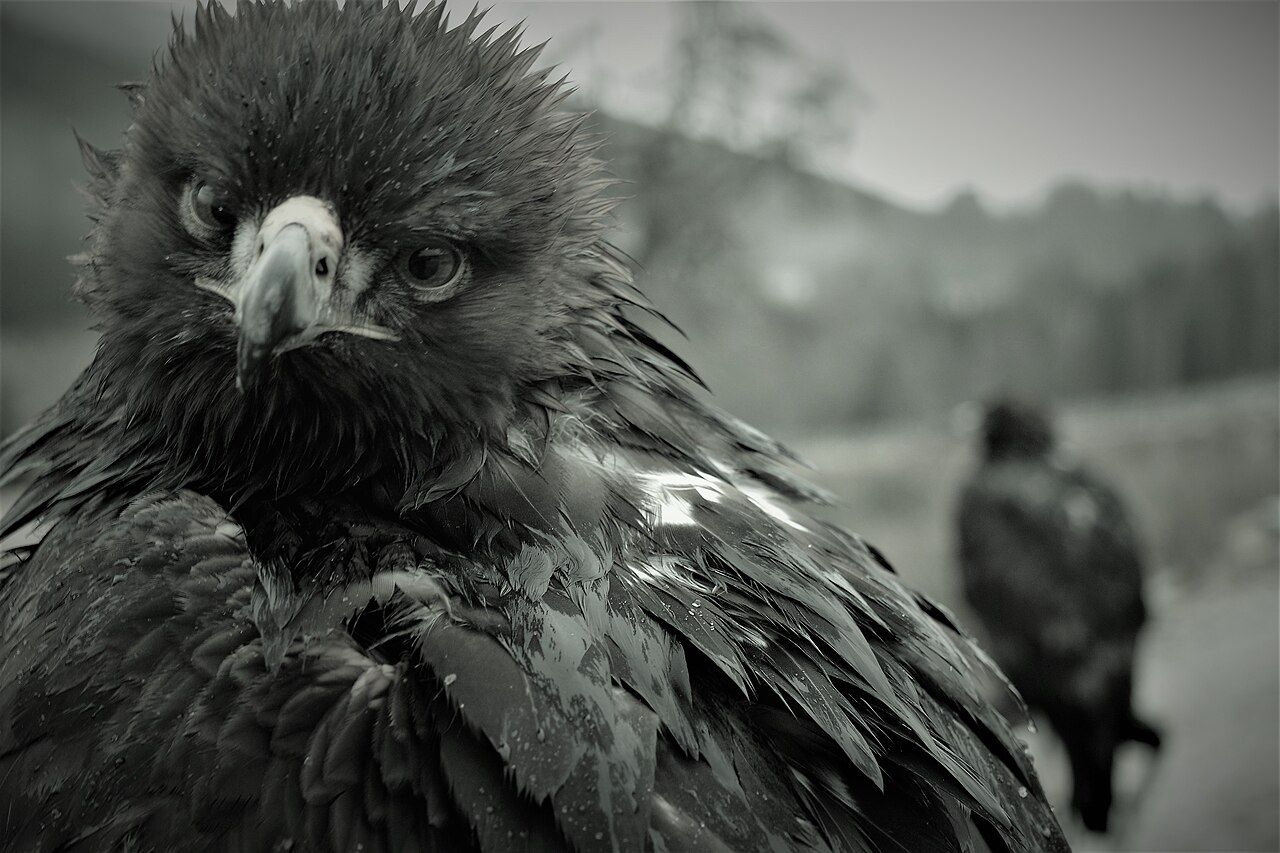

This is where restraint improves the answer. If the bird cannot be seen well enough to judge its wings, calling it an eagle may say more about expectation than identification. The island’s reputation can sharpen attention, but it can also encourage a quick verdict. I would rather have a careful question left open than a confident name attached to the wrong bird.
And what about hen harriers?
Hen harriers nest on Arran’s moors. Golden eagles nest in the northern hills. Both belong in a story about the island’s birds of open country, but the facts give them different settings and do not offer a shared identification test. Keeping those distinctions plain is more useful than blending every large bird into one impression of wildness.
For the golden eagle, the strongest clues remain its wingspan and shallow-V flight, set against the northern hills it inhabits. The surrounding landscape has its own life, from the island's own trees to the animals marked by
. None of that substitutes for seeing the bird clearly.
When is the nest season?
Golden eagles usually lay their eggs in March or April. It is a useful seasonal fact, but it does not turn the calendar into an identification guide. A bird seen outside those months is no less a golden eagle if its features fit; the nest timing simply belongs to the larger account of its life on Arran.
So the answer is a mix of place and shape: northern hills, flat wings held in a shallow V, and a bird that should not be named on size alone. How often does that careful distinction leave the sighting unresolved?