Caisteal Abhail and the Witch’s Step
Granite tors give Arran’s second highest hill its castle-like crown; an eastern ridge cleft makes a striking counterpoint to those broken shapes.
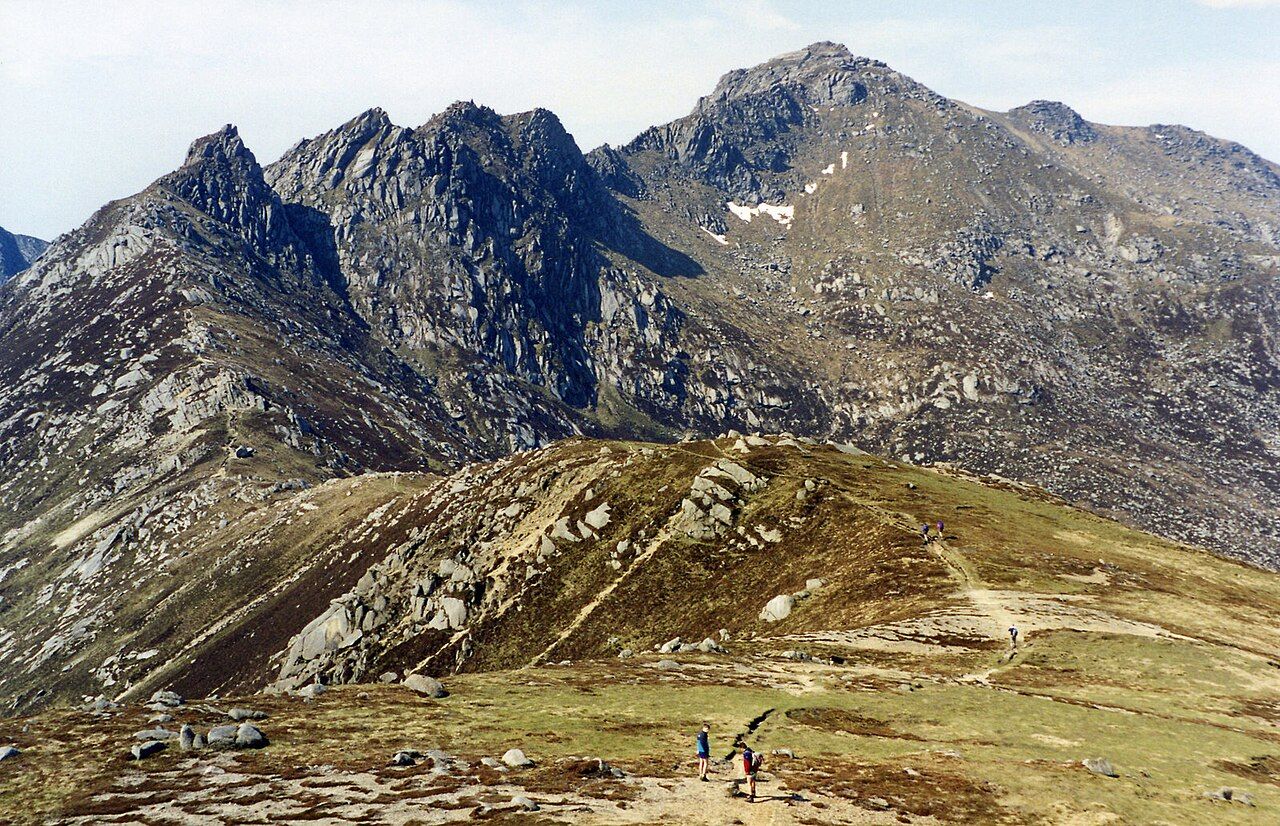
Why does the summit look like a castle?
Because it is crowned with granite tors that resemble the ruins of a castle. Caisteal Abhail is Arran’s second highest hill, at 859 m, but height is not its most distinctive feature. The summit shapes do more to fix it in the mind: broken, upright forms gathered into something that suggests walls and towers without quite becoming either.
That resemblance is strong enough to make the name feel apt. Caisteal Abhail is usually translated as the castle of the ptarmigan. The translation gives the hill a second character, though the granite is the more persuasive presence. It is not a tidy crown. Its appeal lies in the roughness of the forms and in the way they invite comparison without settling into a single answer.
What made the tors?
Weathering along joints in the rock shaped the granite tors. That is a plain explanation for forms that can look almost deliberately built. The distinction matters: the castle impression comes from the rock’s shapes, not from a claim that the summit was made to resemble a castle.
For me, this is the better way to look at Caisteal Abhail. The shapes are enough. They need no added story to seem unusual, and the geological account does not make them less striking. If anything, it makes the contrast more interesting: weathering working along joints, while the eye makes towers and broken walls out of granite.
What is the Witch’s Step?
Ceum na Caillich, the Witch’s Step, is a deep cleft in the east ridge of Caisteal Abhail. It gives the hill a very different shape from the summit tors. The crown is a cluster of forms; the ridge is marked by a cut through the rock. That contrast is the reason the feature holds attention. It is not another castle-like shape, but a sharp interruption of one.
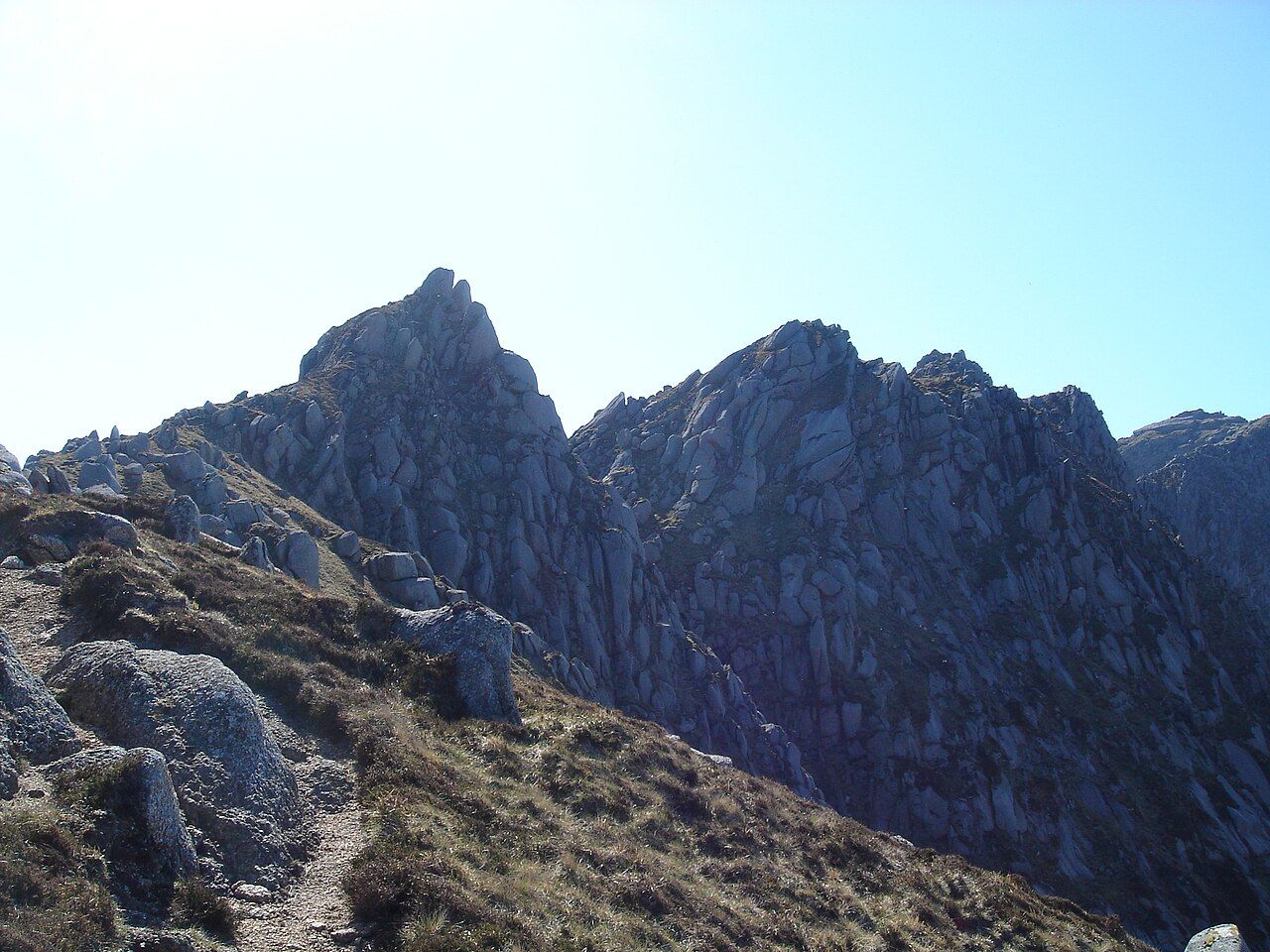

The Witch’s Step can be seen clearly from the coast road near Sannox. Seen from there, the cleft gives the ridge a clear point of difference; the name is memorable, but the shape does the work. Crossing it involves a short rock scramble. That detail makes the notch more than a feature to pick out from a distance, without making it the whole story of the hill.
How does Caisteal Abhail sit in the glens?
Caisteal Abhail stands at the head of both Glen Sannox and the North Glen Sannox valley. That position gives the hill a firm relationship to the landscape around it: the granite forms are not detached curiosities, but the defining shapes at the head of two glens. For a related view of the setting, there is the mining glen below.
The summit and the ridge offer different reasons to look. The tors draw attention upwards, towards a crowded outline. The Witch’s Step draws it along the eastern ridge, towards a deep break. Neither feature needs embellishment. Together they make Caisteal Abhail more interesting than a height figure alone would suggest.
What is worth remembering?
Remember the contrast: a summit shaped into castle-like tors, and an eastern ridge cut by the Witch’s Step. The hill’s name and the name of the cleft add their own stories, but the granite remains the clearest subject. Weathering along joints has made forms that seem suggestive, not exact. That is a more satisfying kind of drama than a shape that explains itself at once.
For more on the granite, see how the granite domed up. There is also the eagles over the high ground.