Sannox, where the bay meets the glen
A name often traced to Old Norse, a rare sandy beach on Arran’s north-east coast, and a deep glen opening towards granite peaks.
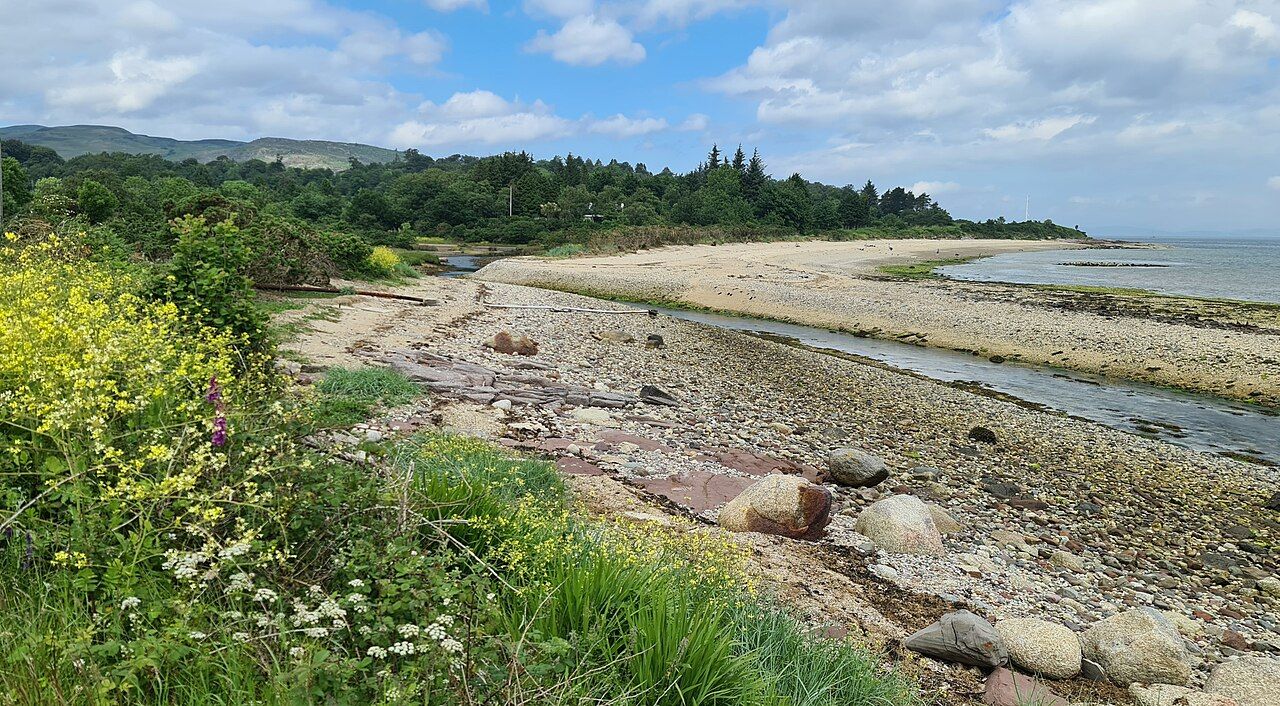
The name gets there before the view: Sannox is often traced to the Old Norse sand-vík, meaning sandy bay. That is a tidy explanation for a place whose strongest impression is the meeting of shore and glen. I like the name’s plainness; it does not promise more than the bay can give.
Sannox is a scattered settlement on Arran’s north-east coast, made up of South Sannox and North Sannox. Sannox Bay has one of the few sandy beaches on this side of the island. The sand gives the coast a different note from the deep glen opening behind it. The name and the land seem unusually well matched.
Glen Sannox opens westward from the bay towards the granite peaks of Cir Mhor and Caisteal Abhail. The contrast is the point: a sandy edge, then an inland opening towards granite. It is a more interesting composition than the bay considered on its own, and more convincing than a glen treated as a separate attraction. For the broader counterpoint, the deep glen behind the bay gives Sannox its shape.
North Sannox has a picnic site and a path leading along the coast towards the Fallen Rocks. The name sounds almost understated for a jumble of huge sandstone blocks that fell from the cliffs north of Sannox. Here, the coast offers a change of scale: bay, path, then rock in substantial pieces.
A small graveyard near Sannox Bay holds old island burials. It lends the settlement a different register from the bay and glen: not spectacle, but a reminder of older lives in this landscape. The account of the Sannox families who left belongs here, though the bay itself keeps the focus on land and name.
Set against the red stone village to the south, Sannox feels defined less by a village centre than by the space between its two settlements, the beach and the glen. The Norse name is an apt beginning, but it cannot settle the question: is Sannox best understood from the bay, or from the ground rising behind it?