Corrie: a village made of red sandstone
Corrie’s red sandstone is not just part of the view. It shaped the harbour, travelled from the shore and gives the village its clearest story.
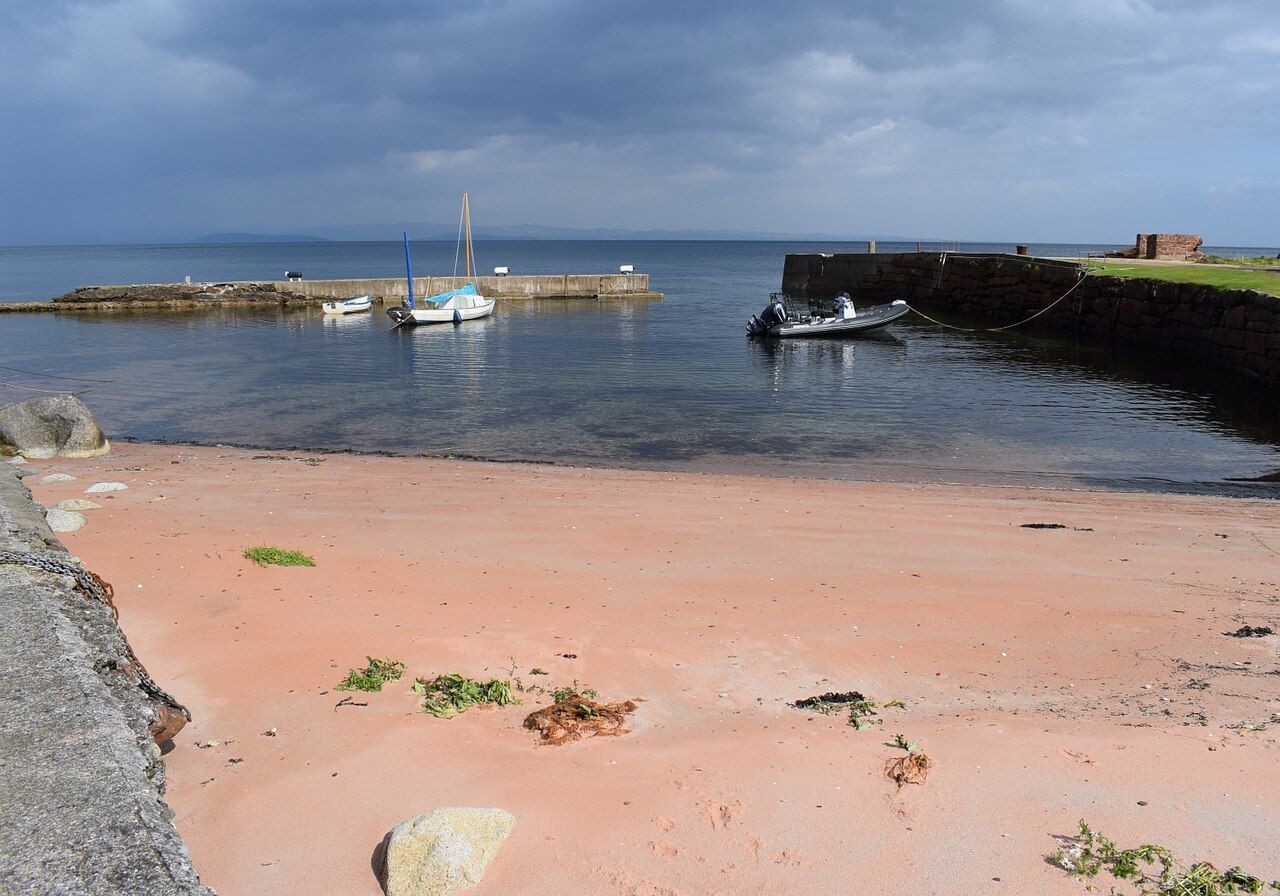
I tend to look at a harbour wall before I look at the view. At Corrie, that habit is rewarded: the wall is built from blocks of local red sandstone, the same rock that outcrops along the shore. The village’s material is not a decorative detail. It is the point.
What is Corrie like?
Corrie is a small village on Arran’s east coast, about 9 km north of Brodick. Its cottages and stone harbour sit between the sea and the hills, but the red sandstone gives the place a stronger identity than that setting alone.
The useful way to read Corrie is as a village shaped by its own ground. The stone is present in the harbour walls, and the shore explains why it belongs here. That connection feels more convincing than treating the village as a pretty stop on the coast.
Why is the harbour made of red stone?
Corrie’s red sandstone was quarried and shipped from its small harbour during the eighteenth and nineteenth centuries. The harbour walls are built from blocks of local red sandstone, so the evidence of that history is not separate from the working structure. It is right there in the material.
This is the detail worth giving time to. A harbour can easily become background in a coastal village; here, its walls make the relationship between quarry and shore unusually clear. There is no need to dress that up. Corrie’s red stone does the explaining.
What can be seen along the shore?
The coast road at Corrie runs along a narrow strip between the sea and the cliffs of an old raised shoreline. It is a spare, striking arrangement: water on one side, cliffs on the other, with little room for the village to pretend it is somewhere else.
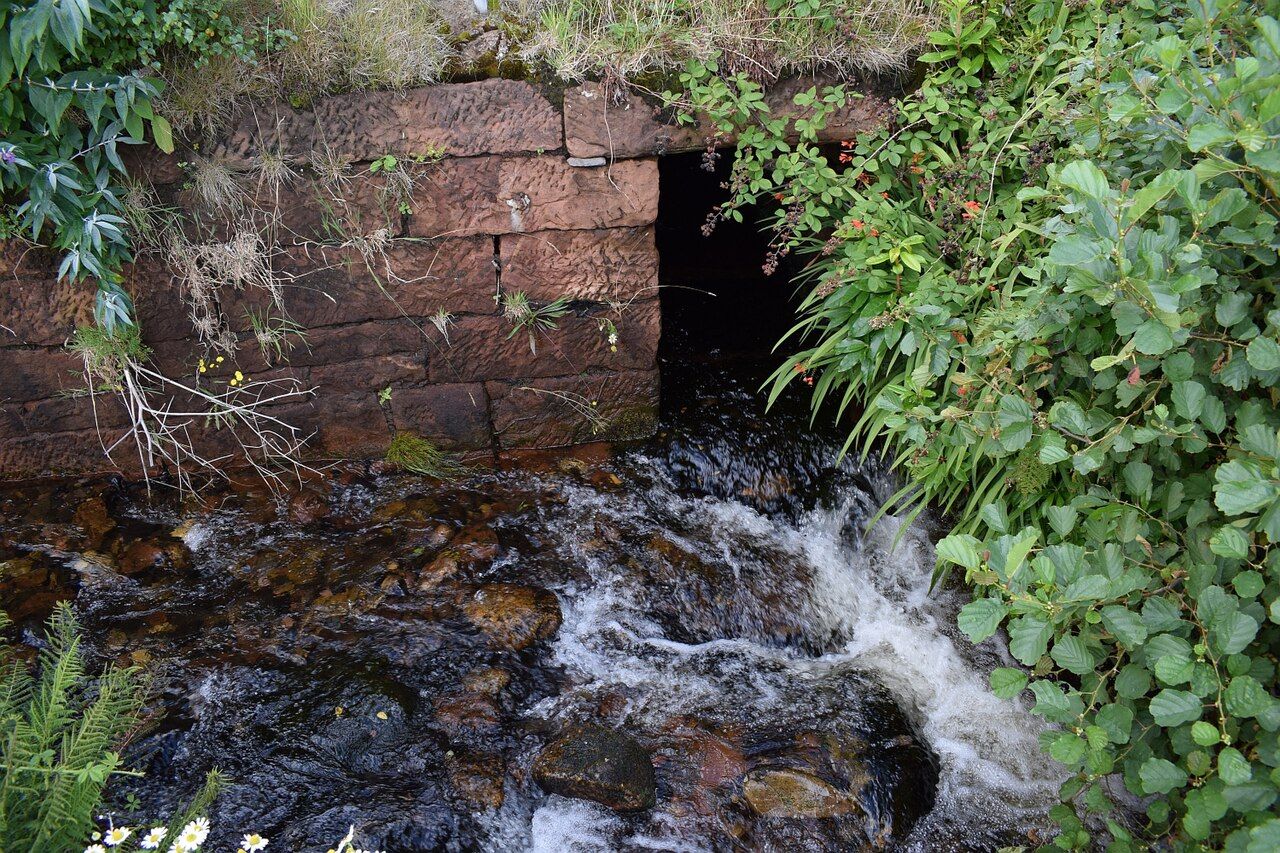

The shore is also a classic place for geology students to see Permian desert sandstone with fossil dune bedding. That gives Corrie a second reason to be looked at closely. The sandstone is not only the village’s building material; it is part of a much older story in the land itself.
Is there more to Corrie than the shore village?
High Corrie is a hamlet on the hillside above the shore village. The distinction matters. Corrie is not just a line of cottages beside the water; it also reaches up the slope, where the setting changes from shore to hillside.
A path from Corrie climbs through Coire Lan to join the ridge of Goatfell. For anyone interested in the shape of the land, that is a more compelling detail than a view from the road alone. The path gives the village a connection to the hills, while the main path up Goatfell offers another point of comparison.
What lies north along the coast?
Sannox lies about 2 km north of Corrie along the coast road. the next bay north is close enough to extend the coastal picture, but Corrie’s own character is best understood first: red stone, a small harbour and a shore where the geology is part of the village’s appeal.
The contrast with the granite of the northern hills helps frame what is distinctive here. Corrie is most persuasive when the rock underfoot and the stone in the harbour are treated as one subject. Its story is modest, but unusually easy to see.