Torrylin Cairn: a burial place above the Kilmory shore
On a low ridge above the Kilmory Water, Torrylin Cairn offers a direct, unsentimental glimpse of burial on Arran.
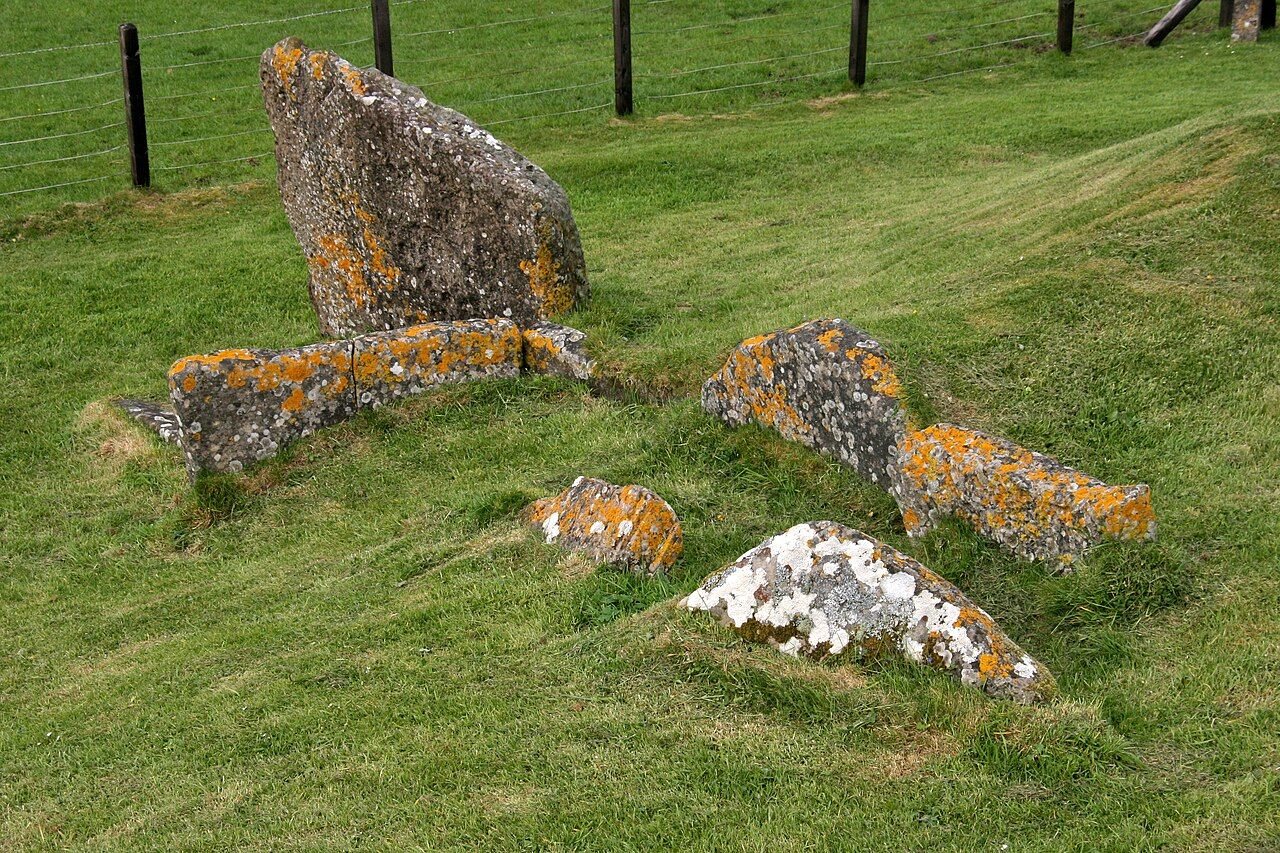
What remains of Torrylin Cairn is enough to make its purpose plain. Near Lagg, on a low ridge above the Kilmory Water, this Neolithic chambered tomb is a burial place first and a monument second.
That distinction matters. The cairn’s stone was taken away in later centuries for building and field walls, so what stands now is not an intact mound to admire. The burial chamber is divided into compartments by stone slabs. It is a spare arrangement, and more affecting for being so.
Excavation in 1900 found the bones of several people. The discovery gives the place its human weight without making it more legible than it is. We know people were buried here; the bones do not turn the cairn into a story with a tidy ending.
Torrylin belongs to the Clyde type of chambered tombs found around the Firth of Clyde. On Arran, it sits in a wider landscape of burial places, from a remoter cairn in the forest to the twin tombs above Whiting Bay. The labels are useful, but the comparison does not need to make every cairn compete for grandeur.
The Kilmory shore is part of the setting, not a backdrop that explains the tomb. The nearby coast also leads east towards the south coast village to the east. The ridge places the cairn above the water, with a short path leading from Lagg. There is little to dress up here: the interest lies in the compartments, the recovered bones and the scale of what has been lost.
That loss is not a reason to dismiss the site. It gives Torrylin a different kind of presence from a complete monument. The stones that remain point to a structure; the excavation points to the people it held. Both are worth attending to, though neither answers much about those who were buried there.
Perhaps the most compelling thing is how direct the evidence is, and how limited. A chamber, divided by slabs; bones of several people; a place above the water. What more can be said without making the silence do too much work?
What did those buried here understand about the ridge that we cannot now recover?