Carn Ban: the long walk to a white cairn
Above Kilmory, Carn Ban makes the walker earn its answer: a long approach through the forest, ending at one of Scotland’s best-kept Clyde cairns.
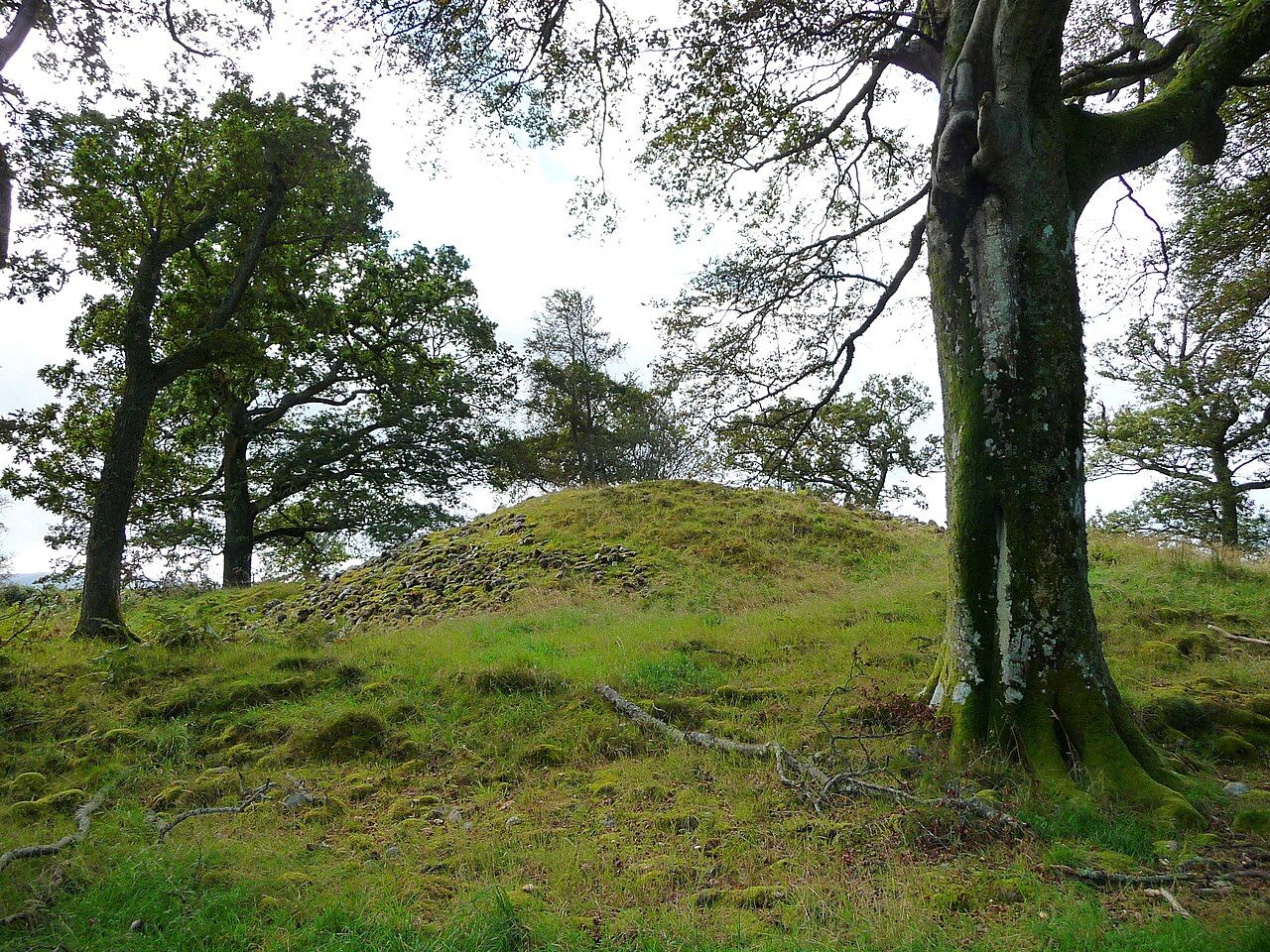
The familiar bargain of a long walk is simple: the ground asks first, and the destination answers later. At Carn Ban, that is not just a pleasant idea. The cairn lies in the forest above Kilmory, and reaching it from the south coast road means several kilometres each way on forest tracks. The effort is part of the place, not a detail to hurry past.
What is Carn Ban?
Carn Ban is a Neolithic chambered cairn and one of the best-kept Clyde cairns in Scotland. It is about 30 m long, trapezoid in plan, and sits about 300 m above sea level near the head of the Kilmory Water. Those facts give it weight before the walk even begins. This is not a small scatter of stones to glance at and leave behind.
The name means “white cairn” in Gaelic. The name is plain; the structure is more complicated. A forecourt of upright slabs once framed the entrance, giving the cairn an approach of its own. That makes the long walk feel well matched to the monument: both ask for attention rather than a quick look.
Is the walk worth the effort?
For anyone who wants a destination that justifies the distance, yes. The walk from the south coast road is several kilometres each way, on forest tracks. That is a substantial walk, and there is no need to pretend otherwise. Carn Ban earns its place through the scale and condition of the cairn, rather than through a claim that every stretch of the approach is a reward in itself.
The judgement is easier because the destination has substance. At about 30 m long, Carn Ban is large enough to make its form legible; its trapezoid plan and the remains of the forecourt give the eye something specific to read. Effort has a purpose here. The reward is not a vague sense of having gone far, but a chambered monument whose design still registers.
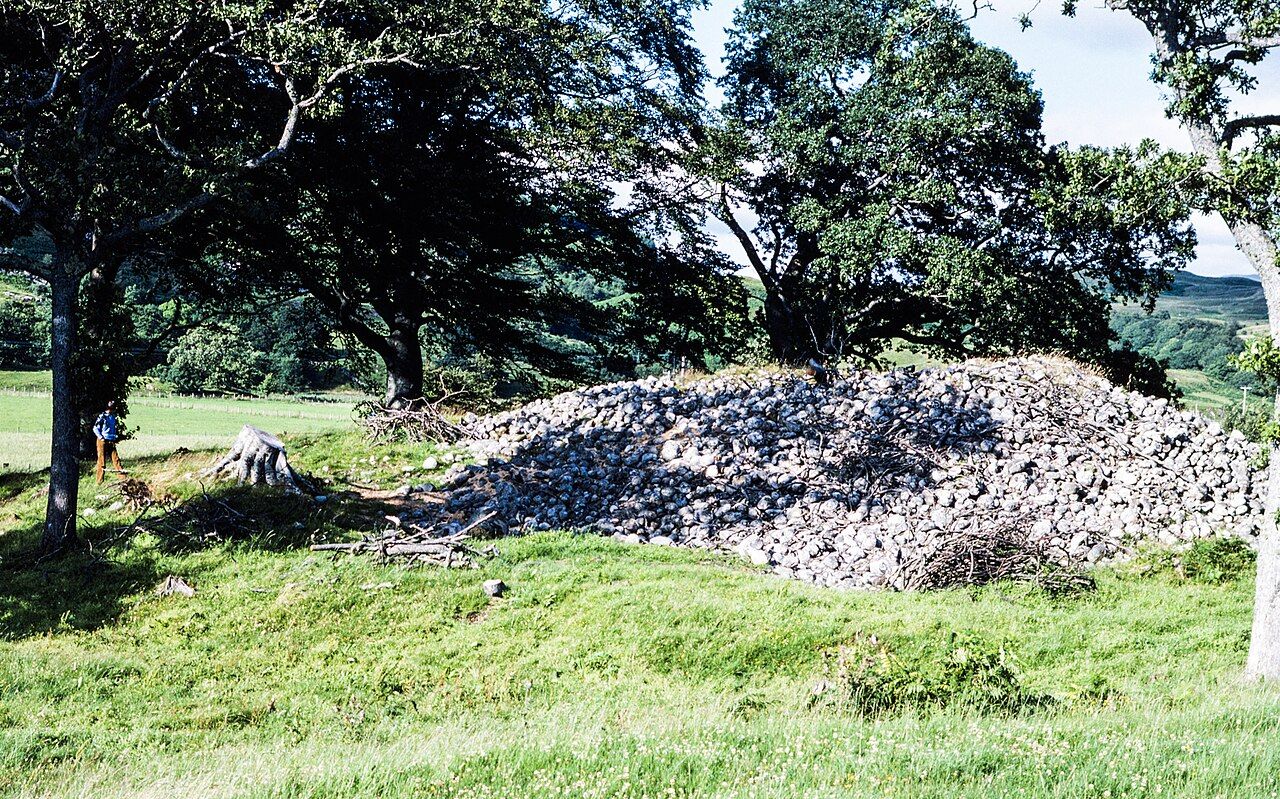

What is inside the cairn?
The chamber was explored in the 19th century and found to be divided into compartments. That is a useful detail: it turns the cairn from a long stone shape into a place with an interior arrangement. The compartments are not something to embellish with guesswork. What is known is enough to make the structure more interesting than its outline alone.
Carn Ban also sits among Arran’s other stone stories. It makes a good point of comparison with the cairn above Lagg the cairn above Lagg, and with the circles across the island the circles across the island. These are not substitutes for Carn Ban; the long cairn has its own character, and the effort to reach it is part of that distinction.
What is the strongest reason to go?
The strongest reason is the balance between the walk and what waits at its end. Carn Ban is not merely remote for the sake of being remote. Its position above Kilmory, near the head of the Kilmory Water, places the monument well into the forest, while its size and good condition make the arrival feel earned. The coast below the forest the coast below the forest belongs to the wider setting, but the cairn is the point of the journey.
There is a mild pleasure in a destination that does not over-promise. Carn Ban asks for time on foot and gives back a substantial, carefully shaped monument. The walk is long; the reason to make it is clear. Is that enough to make the distance feel small?