Glen Iorsa and the value of empty space
A long glen from Dougarie into Arran’s granite, with no road, few paths and a quiet shape defined by water, wet moorland and distance.
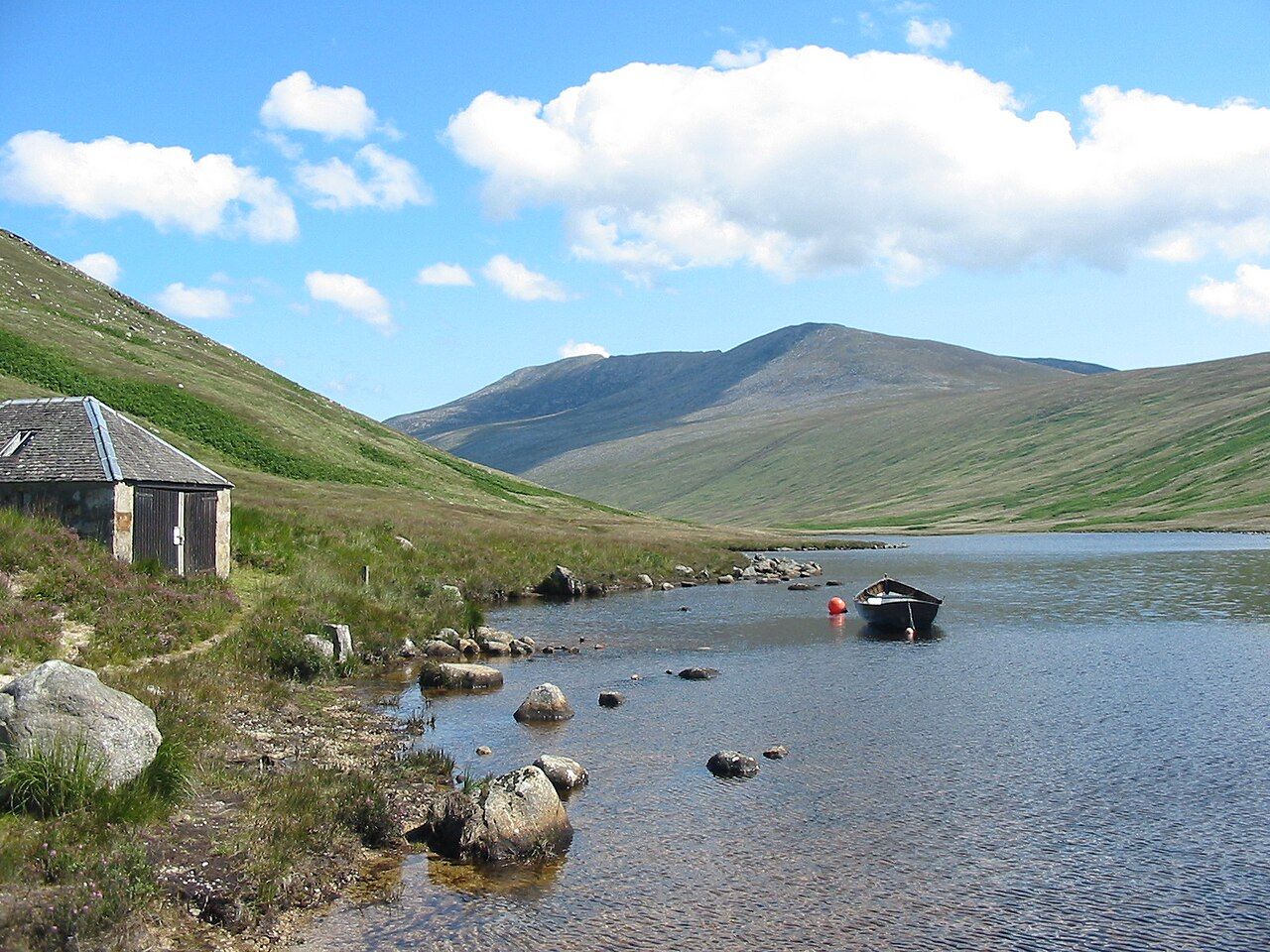
What makes a glen feel empty? Glen Iorsa offers a plain answer: it has no road, and much of it is wet moorland and bog with few paths. The space is not a polished attraction. It is the point.
The glen runs north-east from Dougarie on Arran’s west coast. The Iorsa Water drains it and reaches the sea at Dougarie, giving the landscape a clear line from its upper reaches to the coast. Loch Iorsa lies in the lower part. These are modest facts, but they make a stronger account of the place than grand claims about wilderness.
Glen Iorsa is reached by an estate track and rough paths. That is enough to mark a difference from a glen shaped around a road: movement here is slower, and the routes are fewer. The wet ground and sparse paths are not incidental details. They are what give the glen its character, and what make it less of a simple stroll than the name might suggest.
In the upper reaches, the glen lies between the western hills and the A’ Chir ridge. The contrast is useful: the land is held between high ground, while the floor is largely moor and bog. I prefer this sort of setting to a route that announces a new spectacle at every turn. Glen Iorsa asks for attention to space itself.
There is a link here to the round western tops, but Glen Iorsa is not just a way of looking towards the hills. Its lower water and broad, difficult ground have their own weight. The glen’s appeal is quieter and less immediate than a named summit.
Dougarie, at the mouth of the glen, has a former boathouse with a castellated front. It is a curious detail beside a landscape whose strongest impression is its lack of roads and paths. Red deer are common in the glen throughout the year; the herds that graze the glen belong to its ordinary life, not to a special season.
There is another kind of story in the stone circles to the south, but Glen Iorsa resists being reduced to a stop between better-known things. It is long, wet and open, with water running through it and few paths to divide it into easy pieces.
That is a fairly austere set of qualities. For me, it is also the reason to value the place: not as a checklist, but as a stretch of Arran where the gaps between landmarks matter. How much space is enough?