An Arran winter in plain facts
From November to March, Arran’s winter is a contrast between mild shores, snow on the summits, short days and gales that can interrupt the ferry route.
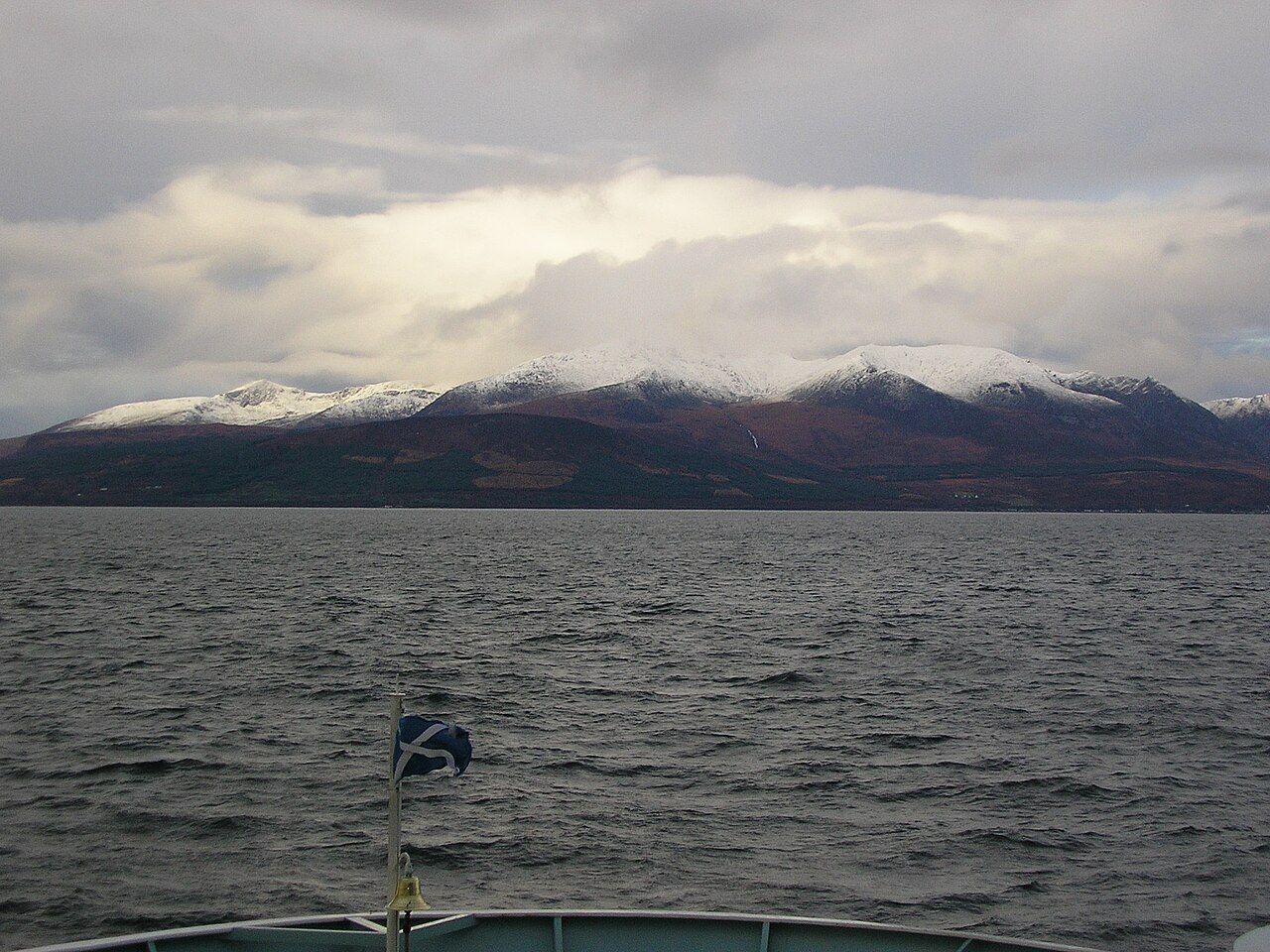
I tend to picture an Arran winter from the shore upwards. Arran has a mild maritime climate, with cool summers and mild winters. Then the view climbs towards the granite peaks, where ice and snow can hold on the ridges and in the gullies. It is a season of contrasts, rather than one uniform stretch of cold.
Are Arran’s winters mild?
By the broad measure, yes. The winters are mild, and snow rarely lies long at sea level. That does not mean the island is free of winter weather; it means the shore and the high ground tell different parts of the story.
The distinction matters more than a simple label. Mild at sea level can sit alongside snow on the summits, sometimes held on the granite ridges and gullies. I would not describe the whole island by its coldest ground, or its mildest.
Does it snow?
Snow falls on Arran’s summits most winters, but rarely stays long at sea level. Snow on the snowy summit is a more reliable part of the winter picture than snow along the shore.
In winter the granite peaks can hold ice and snow on their ridges and in their gullies. That is the sharper edge of the season. The fact that the shores are milder does not cancel it out.
How short are the days?
At midwinter, Arran has about seven hours of daylight. That is a plain fact, but an important one: winter’s character is not only in the temperature or the snow. The day itself is short.
It is a marked contrast with the other end of the year. The winter figures are simple enough; what they mean for any particular day is less tidy. Still, about seven hours gives a clear sense of the season without dressing it up.
Can gales affect the ferry?
Yes. Winter gales in the Firth of Clyde can cancel ferry sailings to Arran. This is one of the season’s more consequential facts, because it puts the weather beyond the hills and shores into the journey itself.
There is no need to turn that into a claim that every winter crossing is affected. The fact is narrower: gales can cancel sailings. It belongs in any honest account of Arran from November to March.
Is one side of the island wetter?
The western side of Arran’s hills receives more rain than the east coast. That is a useful distinction, though it does not reduce winter to a neat division between wet and dry. The fact is about the hills and the east coast, not a promise of a particular day’s weather.
What happens to wildlife in winter?
Red deer come lowest down the glens in winter. Many wading birds and wildfowl spend the season on Arran’s shores and bays. Those are substantial parts of the winter island, even beside the more dramatic account of snow and gales.
Set against the earliest flowers, these winter facts give a season with several scales: short daylight, mild sea-level conditions, exposed peaks, and wildlife moving into lower ground or staying by the shore.
So is Arran’s winter best understood from the shore, the glens or the snow held on the tops?