The rhododendron woods of Brodick
A remarkable collection, shaped by Arran’s mild, wet climate, brings a long flowering season to the woodland garden at Brodick Castle.
Questions about the rhododendron woods
What makes the collection worth attention?
The woodland garden at Brodick Castle holds one of the finest rhododendron collections in Britain. That is a substantial claim, but the appeal is not only a matter of rank. Here is a collection with an unusually long flowering season, shaped by the climate around it. The plants are not a brief spring diversion: some flower early in the year, while others continue into summer.
When was it planted?
Much of the collection was planted from the 1920s onwards. That gives the woods a history as a deliberate garden, rather than a chance gathering of flowering shrubs. The date matters because it helps explain the scale of the collection’s ambition, though the plants themselves are the better argument. For a contrast in garden character, see the older walled garden.
Where did the plants come from?
Many came from plant-hunting expeditions to the Himalaya, China and Burma. That origin gives the collection a wider reach than its setting might suggest. The useful point is not simply that these places are far away; it is that the plants brought from them include tender rhododendrons which can grow outdoors at Brodick. The collection is a meeting of distant plant origins and local conditions.
Why can tender rhododendrons grow outdoors here?
Arran’s climate is mild and wet, and that combination allows tender rhododendrons to grow outdoors at Brodick. The Gulf Stream and the waters of the Firth of Clyde keep frosts short on the Arran coast. Climate is not a decorative footnote to this garden. It is the reason the collection can grow here as it does. Part of the explanation is the mild island winter.
When do the rhododendrons flower?
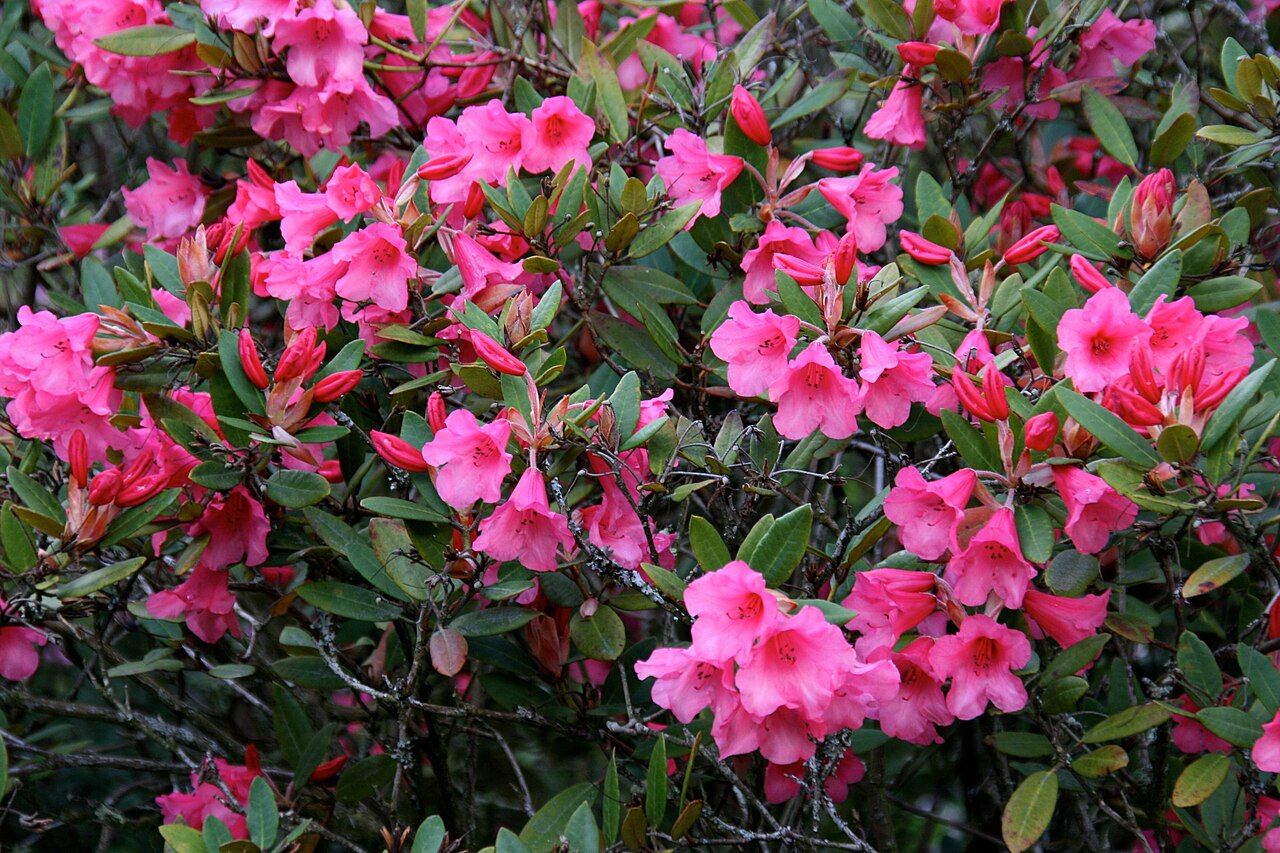
The main flowering season is in April and May. Some flower as early as January, while others carry on into the summer. That spread is the collection’s most persuasive feature: it resists the idea that there is one short moment when the woods matter. April and May remain the central months, but the season has edges on either side.

Are all the plants similar?
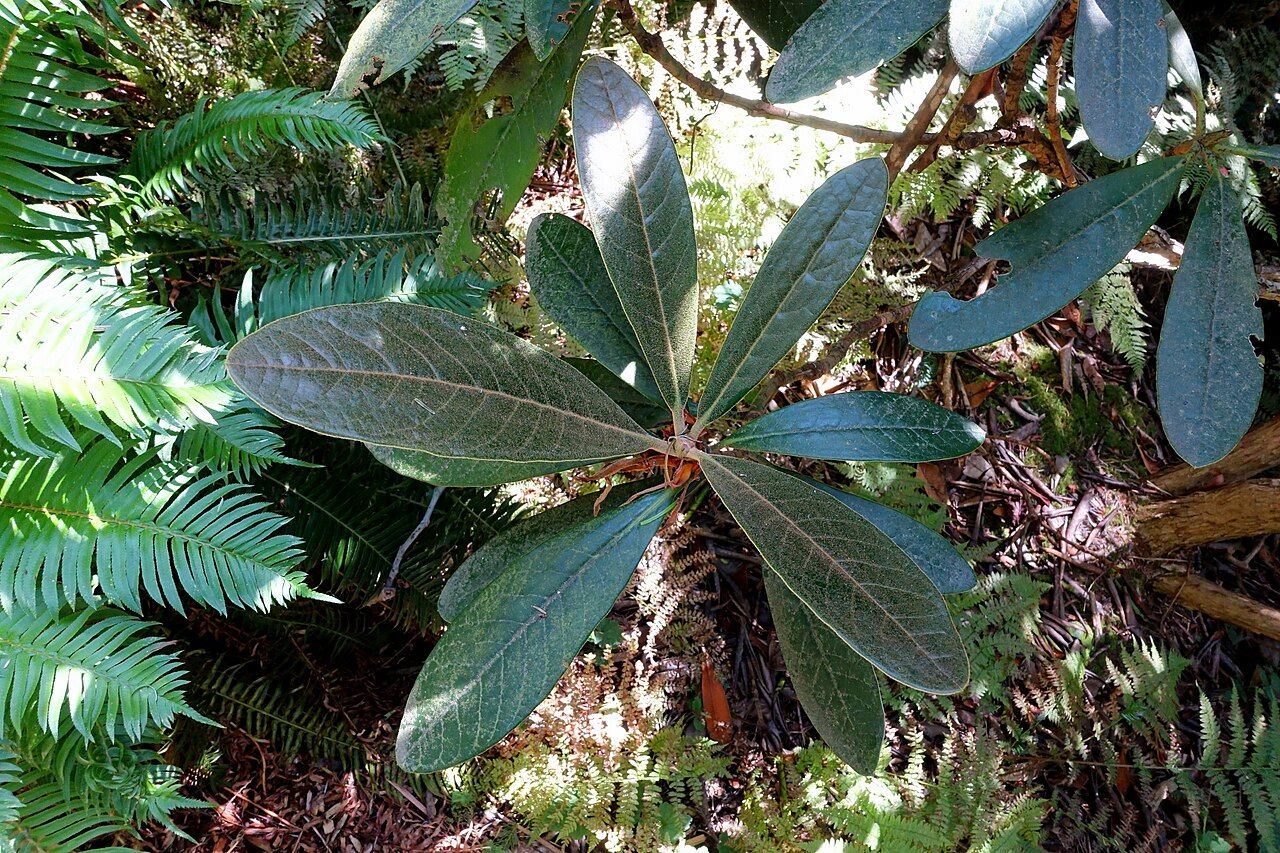
No. Some have large scented flowers; others are notable for big, leathery leaves. That difference is worth dwelling on. A collection can be impressive through its range, not only through a single display of colour, and Brodick offers more than one way to notice the plants. The flowers make the easiest case; the leaves make a quieter one.
What should the woods be judged on?
Not just on whether every plant is flowering at once. The main season is clear enough, but the broader stretch of flowering gives the garden its character. The setting among the woods is integral to the collection, rather than a neutral backdrop. The paths are part of the same experience: the trails through the woods belong to the place, though the rhododendrons are the reason to look more closely.
Is the collection all spectacle?
Its scale and flowering season make it an easy garden to praise, but the more interesting point is the balance between ambition and suitability. Plants from the Himalaya, China and Burma could not simply be assumed to thrive outdoors here; Arran’s mild, wet climate makes that possible. The Gulf Stream and the Firth of Clyde are part of the story, not incidental details.
What is the verdict?
Brodick’s rhododendrons deserve their reputation as a major collection, and the climate explains why they belong here. The main flowering season in April and May gives the garden a clear centre, while flowers from January into summer make its interest less narrow than that. It is a plant collection first, and a good reason to pay attention to the woods around the castle.